Small in-house teams usually compare Semrush and Ahrefs when one person can no longer handle SEO with spreadsheets, Search Console, and a few free tools.
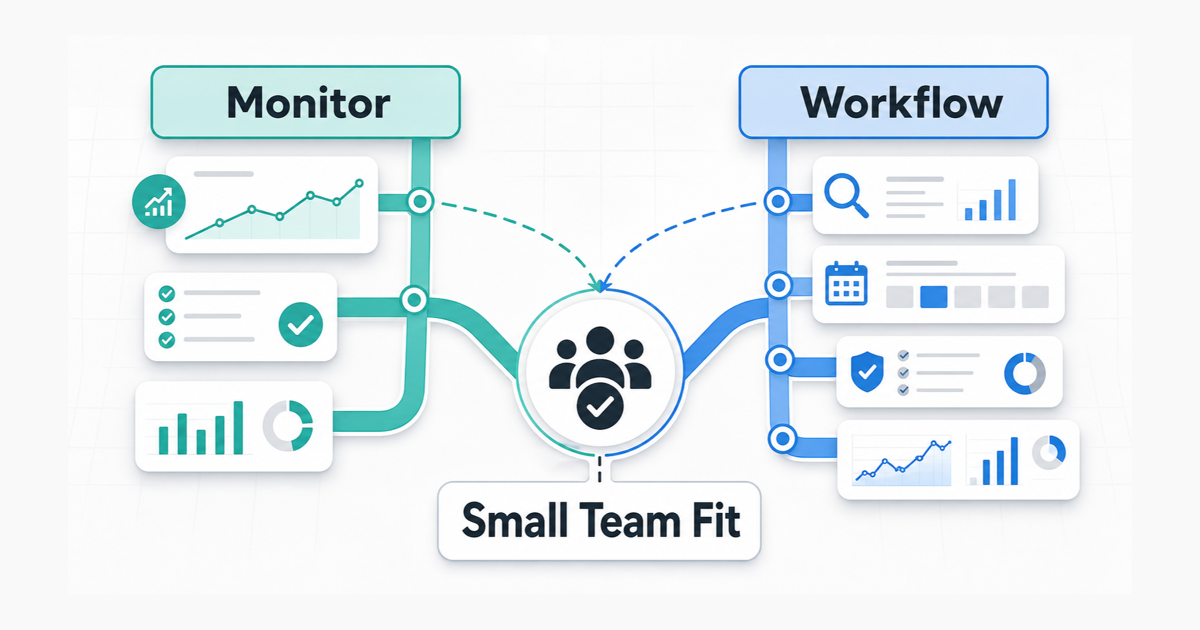
Semrush is the better fit when the team wants one place for recurring SEO work: keyword research, site audits, rank tracking, content planning, competitor monitoring, and stakeholder reports.
Ahrefs is the better fit when the team spends more time investigating competitors, backlinks, SERPs, keyword gaps, and technical issues than building repeatable reports.
The practical question is where the paid tool will save time every week: coordinating SEO work, or finding better evidence for what to do next.
Quick Decision
| Team situation | Better fit | Why |
|---|---|---|
| One small marketing team needs keyword research, audits, rank tracking, content workflow, and stakeholder reports in one place | Semrush | It keeps several recurring SEO jobs in the same routine |
| The team spends more time on competitor research, backlink checks, keyword discovery, and technical investigation | Ahrefs | It gives the team more room to investigate why competitors are winning |
| Reporting and content planning already happen every month | Semrush | Guru adds historical data, content tools, multi-targeting, and Looker Studio reporting integrations |
| The team needs more projects or more mid-tier tracked keywords at a similar headline price | Ahrefs | Standard lists more projects and tracked keywords than Semrush Guru; Advanced lists more projects than Semrush Business |
| AI visibility is already part of the buying decision | Compare carefully | First decide whether you need ongoing AI visibility tracking, not only classic SEO reports |
If you want the safer default for a small in-house team that needs one tool to run the whole SEO routine, start with Semrush. If the team is already good at turning research into action and wants deeper competitive data, Ahrefs deserves equal consideration.
Semrush Wins When Reporting Has an Owner
Semrush is easier to justify when one person has to turn SEO work into a repeatable monthly routine.
That matters for small in-house marketers because the job rarely stops at finding keywords. Someone also has to audit the site, track rankings, plan content, monitor competitors, update reports, and explain progress to a founder or leadership team.
Semrush is stronger when:
- one team owns keyword research, audits, tracking, reporting, and content planning
- SEO work happens every week, not once per quarter
- leadership expects repeatable reporting
- content briefs, topic research, or writing-support tools matter
- the team needs AI visibility monitoring in the same buying decision
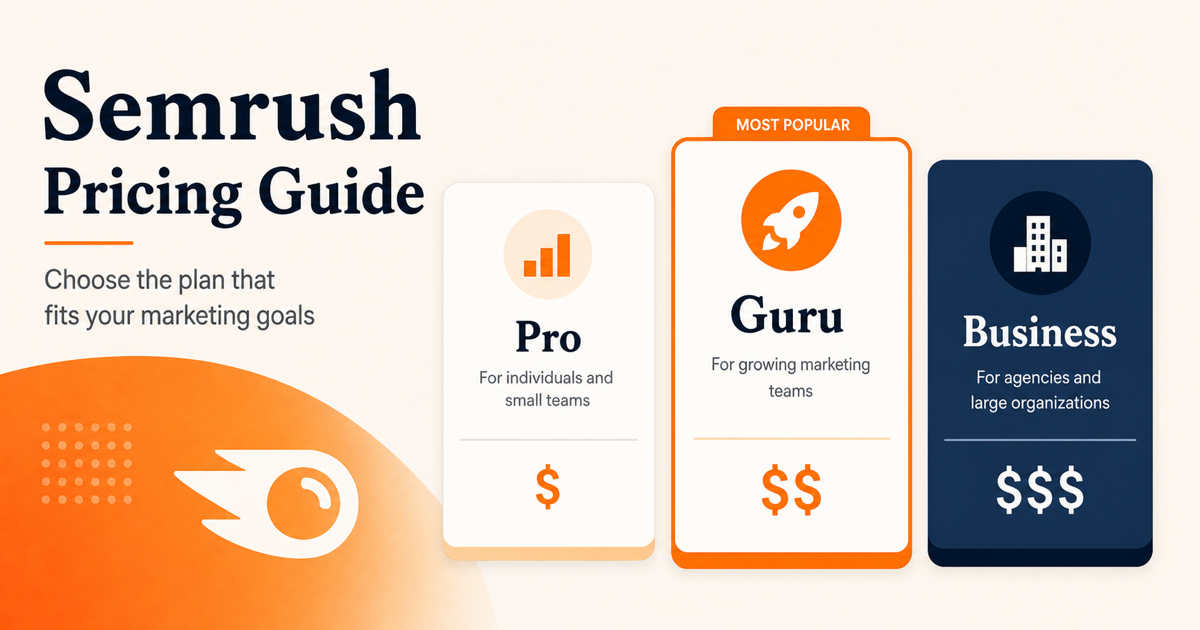
The main plan choice is usually Pro versus Guru. Pro is the lower entry point, but Guru becomes easier to defend when historical data, larger limits, content workflow tools, multi-targeting in Position Tracking, and Looker Studio reporting integrations are part of the job.
For a deeper plan breakdown, read the Semrush pricing guide. For broader fit, read the Semrush review for small teams.
Ahrefs Wins When Research Drives the Backlog
Ahrefs is easier to justify when research decides what the team works on next.
That usually means the team is asking questions that lead directly to backlog decisions:
- Which competitors are gaining organic traffic?
- Which pages and links explain their growth?
- Which keyword opportunities are worth chasing?
- Which technical issues are blocking the site?
- Which topics or content gaps should move into the backlog?
Ahrefs is also easier to compare for some teams looking at paid plans. Its pricing page lists Lite, Standard, Advanced, and Enterprise, plus smaller Starter and Free options. Standard lists more projects and tracked keywords than Semrush Guru; Advanced lists more projects than Semrush Business, while both list 5,000 tracked keywords.
If your team tracks more keywords than it reports on, or manages several SEO projects without needing Semrush-style content and reporting tools, Ahrefs can be the cleaner paid plan to evaluate first.
Price and Limits Snapshot
The numbers below are a snapshot from official pages checked on May 15, 2026. Treat them as a decision aid, not a permanent price table.
| Area | Semrush SEO Toolkit | Ahrefs search marketing plans |
|---|---|---|
| Main paid tiers | Pro, Guru, Business | Lite, Standard, Advanced, Enterprise |
| Entry paid tier | Pro at $139.95/month | Lite at $129/month |
| Mid-tier | Guru at $249.95/month | Standard at $249/month |
| Higher non-enterprise tier | Business at $499.95/month | Advanced at $449/month |
| Enterprise tier | Custom / sales-led options also exist | Enterprise at $1,499/month with annual commitment required |
| Entry tracked keywords | Pro: 500 | Lite: 750 |
| Mid-tier tracked keywords | Guru: 1,500 | Standard: 2,000 |
| Higher-tier tracked keywords | Business: 5,000 | Advanced: 5,000 |
| Entry projects or websites | Pro: 5 websites to monitor | Lite: 5 projects |
| Mid-tier projects or websites | Guru: 15 websites to monitor | Standard: 20 projects |
| Higher-tier projects or websites | Business: 40 websites to monitor | Advanced: 50 projects |
On price alone, Ahrefs Lite, Standard, and Advanced look slightly lower or similar across the main tiers. But the better buying question is not only subscription price. It is which limits and workflows your team will actually hit first.
Semrush often starts to feel expensive when the team needs Guru-level history, content tools, reporting integrations, or extra users. Ahrefs often starts to feel expensive around credit usage, add-ons, extra users, and whether the team needs Standard or Advanced rather than Lite.
Two Small-Team Buying Scenarios
Scenario one: one marketer owns the whole SEO routine.
For example, a two-person marketing team might use the same subscription for weekly rank checks, monthly technical audits, keyword research, content planning, competitor monitoring, and recurring leadership reports. In that setup, Semrush is valuable because several jobs have to become one repeatable operating rhythm.
Scenario two: the team already has reporting and content operations, but needs stronger research inputs.
For example, a content lead might use Ahrefs to inspect competitors, study backlinks, find keyword gaps, review SERP history, and decide which pages deserve updates. If the team already has reporting and content operations elsewhere, Ahrefs can be the cleaner research layer.
Do not buy either tool for a one-time keyword export. Pay when the tool replaces repeated manual work.
Choose Semrush When Coordination Is the Bottleneck
Choose Semrush when coordination is the bottleneck.
That usually means:
- SEO is a weekly function
- the same team owns content planning and reporting
- the team needs site audit, rank tracking, keyword research, and competitor monitoring together
- reporting needs to be repeatable
Semrush is also the more natural next step if your current pain is not research quality, but workflow fragmentation. If the team is already stitching together crawlers, keyword tools, dashboards, and briefs, Semrush can reduce the number of moving parts.
Choose Ahrefs When Evidence Is the Bottleneck
Choose Ahrefs when the team already has a process, but needs better evidence for what to prioritize.
- backlinks and competitor pages matter heavily
- the team wants strong keyword and SERP investigation
- the team can already turn research into briefs and updates
- higher limits for tracked keywords or projects matter
- reporting does not need to live inside the same all-in-one workflow
Ahrefs is easier to defend when backlink-led competitor research, SERP investigation, or tracked-keyword capacity changes the next month of work.
When to Skip Both
Skip both Semrush and Ahrefs if the team does not have recurring SEO work yet.
A paid SEO suite only makes sense if someone will use it every week for keyword research, audits, competitor review, rank tracking, or reporting.
If the site is new, the content cadence is unclear, and no one owns SEO each week, start with Google Search Console, Analytics, a spreadsheet, and a smaller audit or keyword tool. Pay for Semrush or Ahrefs when the team has enough repeated work for the subscription to replace manual effort.
Final Recommendation
Use the first bottleneck to decide.
If the bottleneck is coordination, reporting, and turning SEO into a repeatable monthly routine, choose Semrush and expect Guru to become the real plan once history, content tools, or reporting integrations matter.
If the bottleneck is evidence, competitor analysis, backlinks, SERP investigation, or tracked-keyword capacity, choose Ahrefs and compare Lite, Standard, and Advanced against the number of projects and keywords the team will actually monitor.
If neither bottleneck exists yet, skip both for now. Start with cheaper tools until the repeated work is obvious.
Sources Checked
Sources checked on 2026-05-15:
- Semrush SEO Toolkit pricing and limits: https://www.semrush.com/kb/1547-seo-toolkit-pricing-limits
- Semrush One vs SEO Toolkit: https://www.semrush.com/kb/1624-semrush-one-vs-seo-toolkit
- Semrush features: https://www.semrush.com/features/
- Ahrefs pricing: https://ahrefs.com/pricing
- Ahrefs SEO guide and tools overview: https://ahrefs.com/seo