A solo founder or two-person product business can get a real Shopify store live quickly without turning setup into a technical project. The tradeoff shows up later, when subscription fees, app costs, payment fees, and plan limits start to shape the store’s day-to-day economics.
Quick verdict
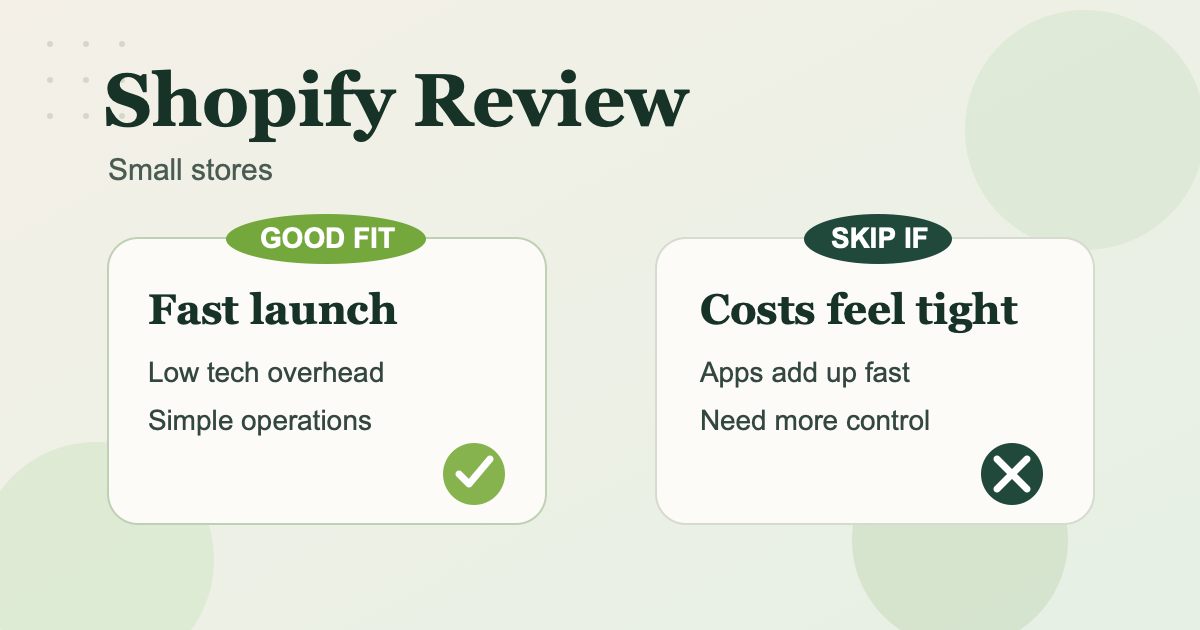
- Shopify earns its keep when the first 90 days need to be about launching products, handling orders, and sorting out small operational issues, not managing the stack underneath the store.
- Shopify gets harder to justify when the first 90 days will likely require several paid apps, multiple admin users, or a payment setup where Shopify Payments does not fit the business.
Who Shopify fits best
A small store owner may be moving from Instagram, Etsy, or manual orders to a dedicated branded store.
In month one, the same person may be fixing product titles, answering customer emails, issuing refunds, editing inventory, and changing the theme. That is where Shopify becomes useful quickly. The platform cuts down on setup decisions and keeps most of that work in one admin dashboard instead of scattering it across hosting tools, plugins, and checkout workarounds.
What you are really paying for
Shopify makes budgeting look clean at first, but the real cost depends on which stage the store reaches. Shopify’s standard plans are Basic, Grow, and Advanced, and annual billing charges you for the full year upfront in exchange for a lower effective monthly rate than monthly billing.
That matters because Shopify is not just a storefront fee. You stop managing hosting, checkout setup, SSL, and much of the usual platform maintenance work. In return, you take on recurring subscription costs, card processing rates or third-party transaction fees, and app charges that may run on separate billing cycles from the main plan.
The tradeoff is not just “cheap versus expensive.” It is “simpler operations now” versus “more control over costs and the platform later.”
The first month test
1. Launch week is where Shopify feels strong
For a first store, Shopify removes many of the decisions that make ecommerce setups drag on. Hosting is included, checkout is already there, SSL is built in, and the admin is designed for non-technical operators.
That is why Shopify can be the right answer even when it is not the absolute cheapest answer. If the store would otherwise stall because no one wants to manage setup details, the convenience has real value.
2. Staff access becomes a real decision sooner than some stores expect
Shopify tends to feel easiest while one person still runs most of the store. The first real friction often appears when another person needs admin access for fulfillment, support, inventory, or merchandising.
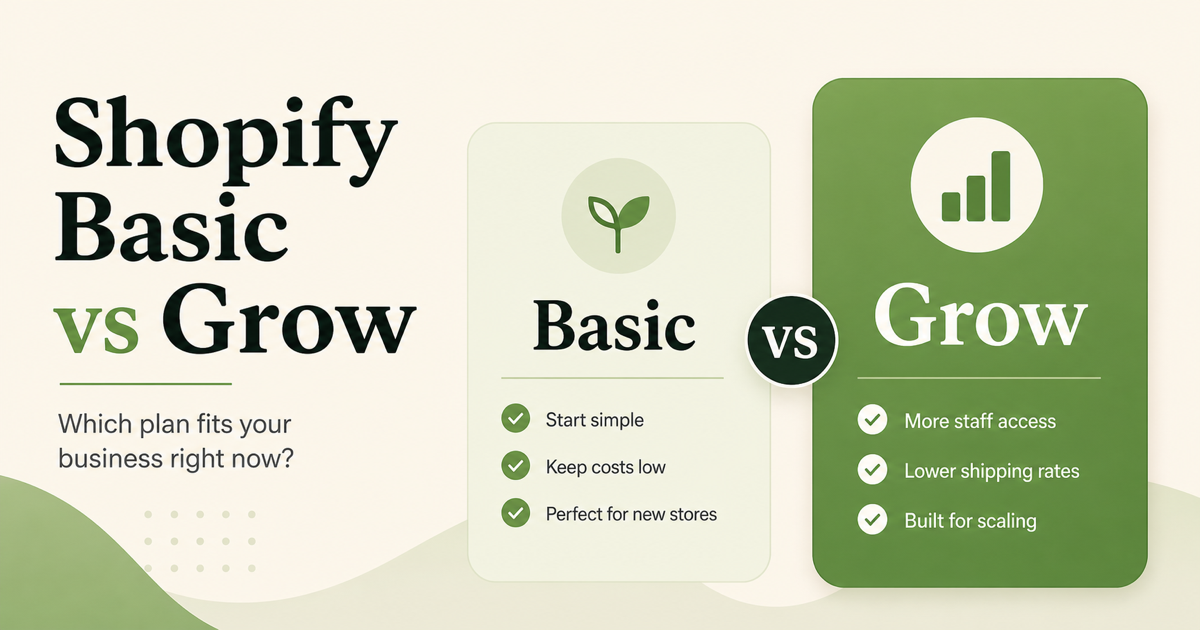
For buyers, the important point is that a second real operator can push the store into a different pricing tier sooner than expected. Shopify’s user-limit docs say staff user accounts are available only on the Grow plan and higher. Basic includes no staff user accounts, Grow includes 5, and Advanced includes 15. Basic’s zero-staff-account limit applies only to staff accounts, not every user type.
That means Shopify can feel cheap and clean right up until the store stops being a one-person operation. If the second operator only needs order visibility, the pressure is lower. If that person needs real admin control over products, inventory, or store settings, you may need to upgrade much sooner. For some small stores, that moment arrives before revenue can justify the upgrade.
3. Payment fit changes the math
The payment question also changes the economics fast. Shopify’s help center says that orders processed through Shopify Payments are not charged the usual third-party transaction fees, although stores created on or after May 12, 2025 can still see those fees on store credit or gift card amounts.
That makes Shopify easier to justify when Shopify Payments is available in the store’s country and fits the business. If the store cannot use Shopify Payments without tradeoffs, Shopify becomes easier to rule out early, not just harder to budget for.
Where the cost pressure starts
1. Paid apps show the real cost
Shopify’s billing overview says app subscriptions can run on a different billing cycle from the main Shopify subscription. That sounds minor until a small store starts adding apps for reviews, subscriptions, bundles, upsells, or shipping workflows.
A store owner who only looks at the headline plan fee can easily underestimate the real monthly cost. Shopify is easier to budget than a custom stack, but it is not the same as being cheap.
2. Convenience can become its own lock-in
The pattern to watch for is simple: add one app for reviews, another for bundles or subscriptions, then upgrade the plan when a second admin needs real access.
The problem starts when each operational fix becomes another recurring charge. If margins are already thin, paying for convenience can become a habit rather than a deliberate choice.
The buyer most likely to regret Shopify
Shopify is most likely to disappoint a small store that starts with thin margins, expects to add multiple paid apps early, needs more than one admin login quickly, and cannot use Shopify Payments without tradeoffs.
That buyer regrets Shopify because convenience gets expensive before the store has enough margin to absorb it.
If you already have a stable WordPress setup, someone already handles maintenance, or early customization matters more than operational simplicity, Shopify may still be easier, but it stops being the obvious business decision.
Final take
For a small store, choose Shopify when the real bottleneck is getting a reliable store live, handling orders, and keeping admin work simple in the first few months.
Choose it when faster launch, one clear admin dashboard, and lower technical overhead are worth recurring subscription and app costs. Skip it when thin margins, required paid apps, and a poor Shopify Payments fit would make every added software charge hurt immediately, or when your store already has the technical support to carry more of the stack itself.
For help choosing a plan, read our Shopify Basic vs Grow comparison. For costs, read our Shopify vs WooCommerce pricing comparison.
Sources checked on 2026-05-12
This review is a source-checked buyer-fit analysis based on Shopify’s pricing and help documentation as of 2026-05-12, not a hands-on platform test.