If you are comparing Shopify vs WooCommerce pricing, the first mistake is comparing only Shopify’s plan fee against WooCommerce’s free core plugin. The real question is what your store will cost after hosting, payments, extensions, and maintenance are included. The tiebreaker is usually whether you already have WordPress hosting and maintenance in place.
The short answer
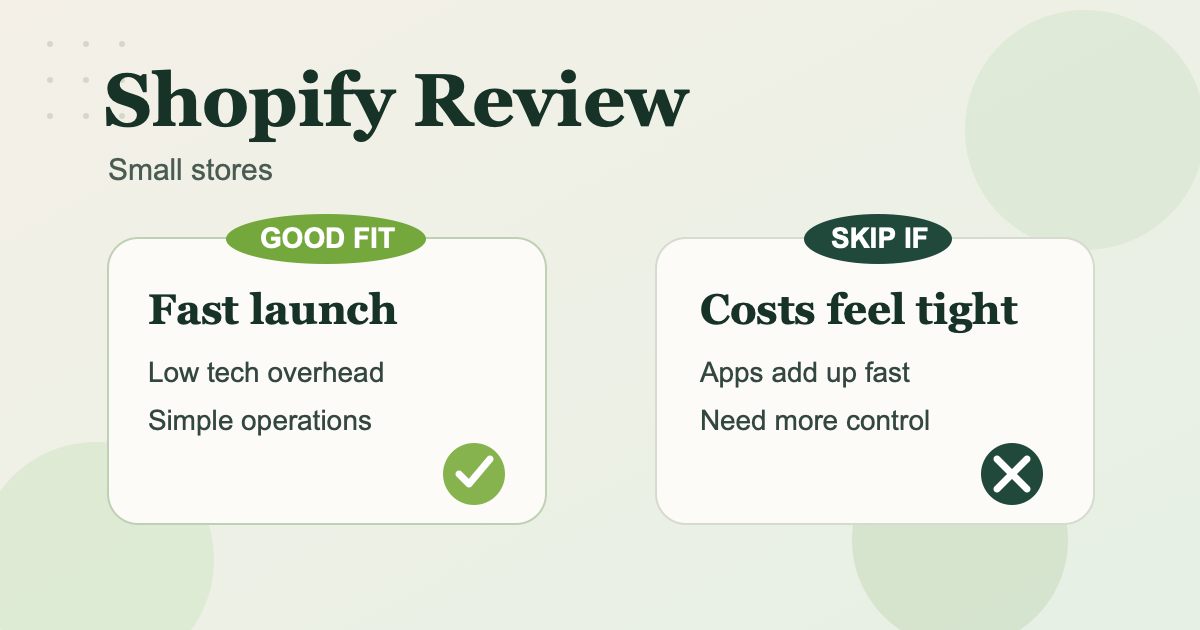
- Choose Shopify if this is your first store, you do not already have a WordPress site, and no one handles maintenance.
- Choose WooCommerce if you already run WordPress and someone already handles hosting, plugins, and ongoing store upkeep.
WooCommerce is free software, not a free store
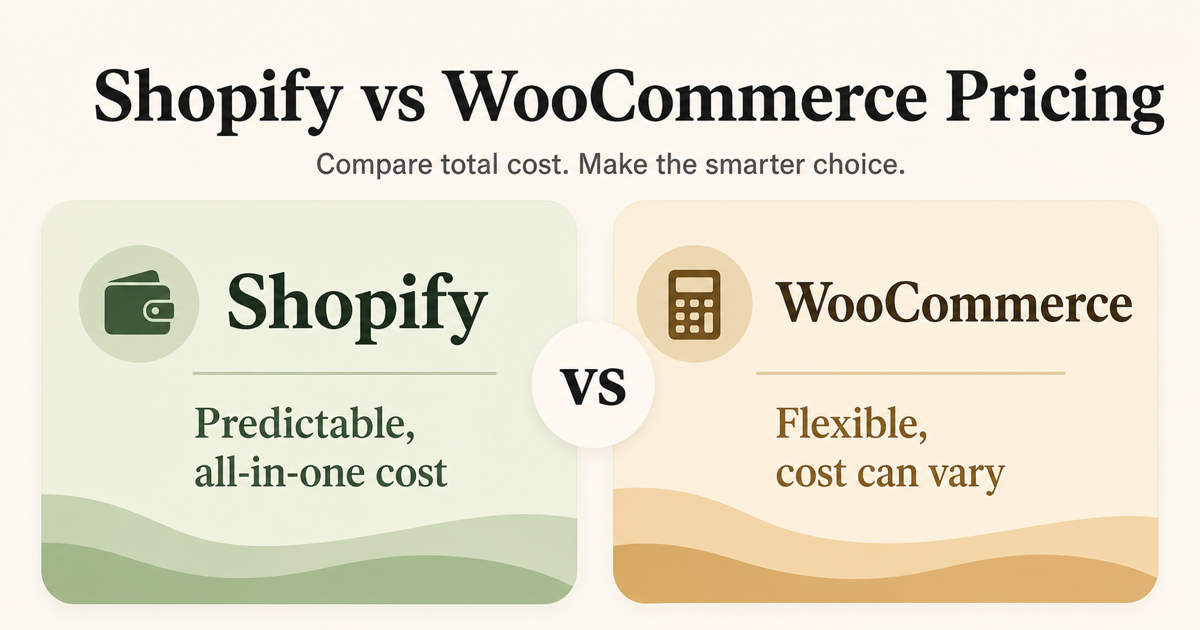
Shopify charges a recurring platform subscription. WooCommerce core is free, but hosting, payments, and extension costs stop being optional as soon as the store needs reliable checkout, backups, updates, and paid extensions. If you still need to add those pieces, WooCommerce is not really starting from zero.
Quick cost view
| Cost area | Shopify | WooCommerce |
|---|---|---|
| Core platform | Paid subscription plan | Free core plugin |
| Hosting | Included in the platform | WooCommerce says most stores spend about $25 to $350/month |
| Payments | Shopify Payments rates vary by plan; third-party transaction fees can apply | No platform fee or revenue share; processor fees still apply |
| Extensions / apps | Optional app subscriptions are billed separately | WooCommerce says many extensions cost $29 to $299/year each |
| Maintenance | Platform and hosting maintenance handled by Shopify | Usually higher because you handle plugin conflicts, update testing, backups, and performance work |
Shopify is easier to price before launch
As of May 2, 2026, Shopify’s pricing materials show a lower annual-billed Basic rate than month-to-month billing, and Shopify’s help center says annual billing is charged upfront for the full year.
That does not mean the Shopify subscription is your only cost. Payment rates vary by plan, and app subscriptions have their own billing cycles. For a first store with no host, no WordPress maintainer, and no plugin setup, Shopify is easier to price before launch because hosting, platform maintenance, and basic infrastructure are already bundled. That does not make it cheaper in every month, but it does make the starting cost easier to estimate.
WooCommerce starts free, but hosting, extensions, and upkeep add up
WooCommerce’s pricing page says the core platform is free, with no monthly subscription, no platform fees, and no revenue share. But the same page also says hosting for most stores falls in the $25 to $350/month range, and extensions often cost $29 to $299/year each.
That means WooCommerce can stay cheap if:
- you already pay for WordPress hosting
- the store can run on a small set of extensions
- someone already handles plugin updates, backups, and site performance
If none of those are true, treat WooCommerce as a paid setup before you compare it with Shopify. Hosting, paid extensions, and maintenance still need both a budget and someone responsible.
Shopify Payments vs choosing your own processor
As of May 2, 2026, Shopify’s US pricing page lists a 2% third-party transaction fee on Basic. Shopify’s billing docs also say that orders paid through Shopify Payments are not charged third-party transaction fees, although store credit or gift card amounts can still trigger them on stores created on or after May 12, 2025.
WooCommerce’s pricing page says card processing with WooPayments is roughly 2.50% to 2.90% plus 30 cents per transaction, and WooPayments says it has no setup fees or monthly fees. Exact WooPayments fees still vary by country, currency, and payment method.
For payments, Shopify makes more sense if your store can use Shopify Payments and you do not want a separate gateway decision yet. WooCommerce makes more sense if you already have a processor relationship or need a gateway Shopify Payments does not cover.
Shopify can be cheaper for a new store that still needs hosting and extensions
Using WooCommerce’s own published ranges, $25/month hosting plus a $29/year extension is about $27.42/month before you count maintenance. Depending on the current Shopify Basic rate, one more paid extension, a paid backup tool, or any outside maintenance time can erase or sharply narrow WooCommerce’s entry-price advantage.
Use existing WordPress ownership as the tiebreaker
WooCommerce is cheaper only when you already run WordPress on stable hosting, need only a small set of extensions, and already have someone handling updates, backups, and performance work.
If there is no WordPress site, no hosting plan, and no person already maintaining WordPress, Shopify is easier to budget for before the store earns revenue.
If WordPress hosting and maintenance are already in place, compare hosting + required extensions + maintenance responsibility against Shopify Basic before choosing WooCommerce. If that total is not clearly below Shopify Basic, WooCommerce is not the cheaper choice yet.
Sources for current pricing details
- Shopify pricing
- Shopify pricing plans and billing overview
- Shopify third-party transaction fees
- WooCommerce pricing
- WooPayments fees
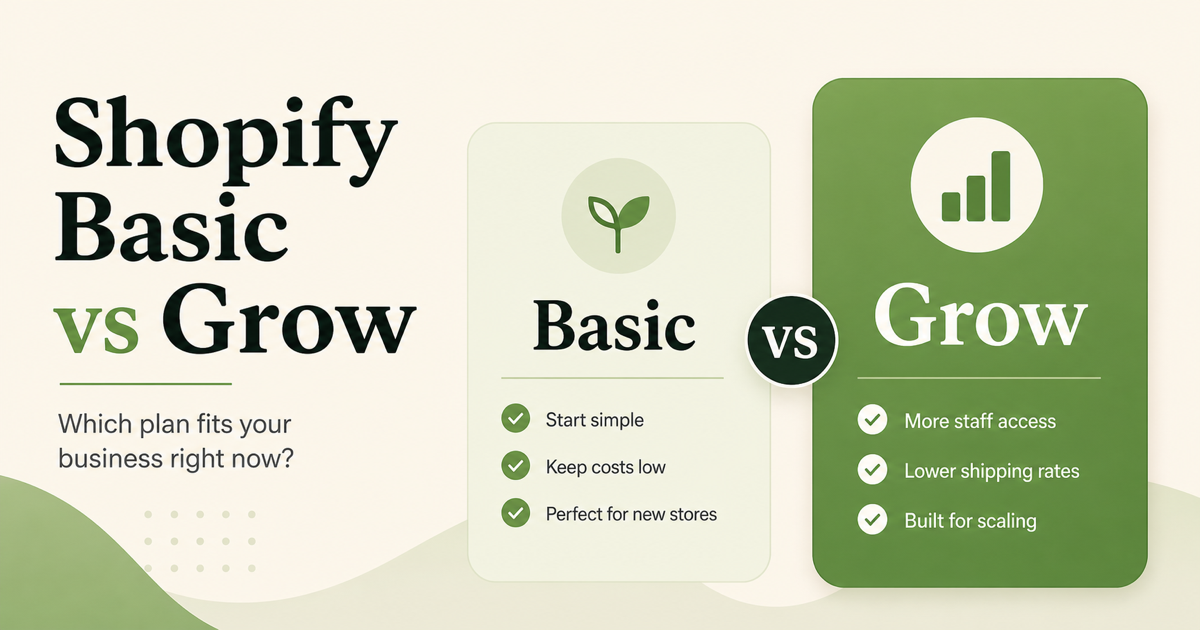
If the remaining decision is Shopify plan level, read our Shopify Basic vs Grow comparison.